
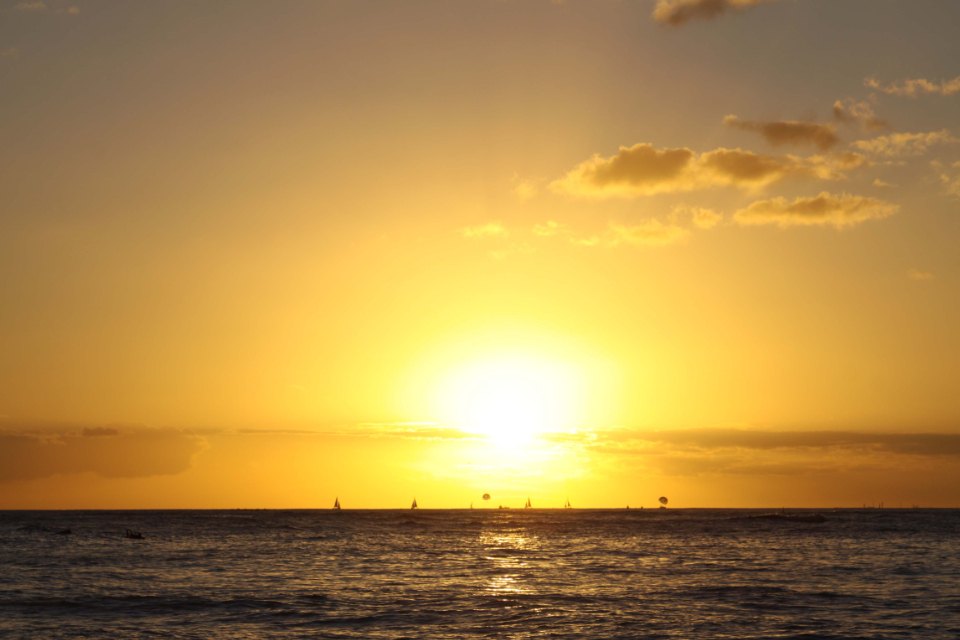
From the beach at the south end of Gasparilla Island, beside the old lighthouse, Boca Grande Pass does not look like much: a gap of a little under a mile between the island and Cayo Costa, where Charlotte Harbor empties into the Gulf of Mexico. Then the tide starts to run, and the water in the middle of the pass, over a hole that drops past 70 feet, begins to boil. In May, that hole holds more tarpon than any comparable piece of water on earth, and the boats that gather over it, sometimes 200 at once, are one of the strangest sights in saltwater fishing. We spent four days there in the third week of May, and this is what we found.
The setting
Charlotte Harbor is a broad, shallow estuary fed by the Peace and Myakka rivers, roughly 25 miles long and 10 wide, on Florida’s southwest coast between Sarasota and Fort Myers. Its main outlet to the Gulf is Boca Grande Pass. The tide pushes an enormous volume of water through that gap four times a day, and the current in the deep channel can run three to four knots at the peak of a spring tide. Tarpon migrating north along the Gulf coast in spring find the pass full of crabs, shrimp and baitfish being flushed out of the harbor, and they stop to feed and, by every sign, to stage before spawning offshore.
The season runs from April into July, but the third week of May through the end of June is the heart of it. We launched from the mainland at Placida and ran the six miles down the back side of Gasparilla Island each morning, arriving at the pass around seven with the day’s first tide.
The fleet
Nothing quite explains the pass until you have drifted it. On our second morning we counted 140 boats, from 16 foot skiffs to 40 foot sportfishers, moving in a slow rotation over the hole. The pattern is set by custom and by the current: boats motor to the up-tide end of the drift, drop their baits, and drift with the flow through the deep water, then pull lines, run back up the edge of the pack and do it again. It is orderly in the way a busy airport is orderly, and it falls apart the moment someone tries to cut across the pattern.
The etiquette is not written down but it is enforced. A hooked fish has the right of way, and boats give way as the angler follows it out of the pack. Anchoring in the drift is not done. Running through the middle of the fleet at speed earns a response that we will not print. For four days we saw one near collision and heard a great deal of shouting, which for 140 boats over a hole the size of a football field seems reasonable.
Jigs and live bait
The pass has a long and sometimes bitter argument at its center. For decades the pass fleet fished live bait: pass crabs, squirrelfish, pinfish and threadfin herring, drifted near bottom on heavy weights that break away when a fish is hooked. Then in the 1990s a jig technique took hold, a heavy leadhead with a soft plastic tail fished vertically in the deep water. It caught tarpon in astonishing numbers, and it caught them in the side, the back and the belly often enough that the older guides called it snagging and said so at public meetings for years.
The state stepped in a little over a decade ago and restricted the breakaway jig rig in the pass, and the argument has cooled, though not died. What we saw in May was mostly live bait fished on 60 to 80 pound leaders with 7/0 to 9/0 circle hooks, a sliding weight of 4 to 8 ounces on a light dropper that snaps off on the strike, and 50 to 80 pound braided main line. Some boats still fished conventional jigs, legally, and did well when the fish were deep.
The hill tide
The event that makes May special is what the locals call the hill tide. On the strongest outgoing tides around the new and full moon, the harbor flushes millions of small pass crabs through the channel and out into the Gulf. The tarpon rise off the bottom and feed on them at the surface, rolling and gulping in the rips on the Gulf side of the pass. On a good hill tide the surface of the water is dimpled with crabs and the fish can be seen by the hundreds, their backs breaking the water in the late afternoon light.
Our third day fell on the full moon. From about four in the afternoon the crabs began to flow, and for two hours we drifted a live crab on a light weight, 20 feet down and then on the surface, and hooked six fish. Three were jumped off in the first minute, which is standard for tarpon. One, a fish we put at 130 pounds, ran under the fleet toward the lighthouse and was leadered after 35 minutes off the Gulf beach in 20 feet of water. All were released at the boat, the hook removed or the leader cut, none lifted from the water.
Sharks
The pass has one predator that fishes it better than any of us. Great hammerheads, some of them 12 to 14 feet long, follow the tarpon into the pass in May and June and take hooked fish with an efficiency that is hard to watch. We lost two fish to sharks in four days, one of them at the boat in a single strike that removed everything behind the gill plates. The etiquette here is settled too: when a shark is on a hooked fish, the angler frees the spool and lets the tarpon run, or breaks it off. Fighting a tired tarpon to the boat with a hammerhead circling is a death sentence for the fish, and the regulars know it.
What we took away
Over four days we jumped 19 tarpon and brought 8 to the boat, which the guides told us was a fair week for a crew that was learning the drift. The fish were between 60 and 150 pounds. The fleet was as crowded as we had been warned, the current as strong, the hammerheads as large. And none of it made the fishing worse. There is nowhere else we know of where you can stand on the deck of a small boat and watch tarpon roll by the hundred in clear green water 200 yards from a beach, with a lighthouse at your back. In May, Boca Grande Pass is a spectacle first and a fishery second, and both parts are worth the trip.