
The road ends at Venice. Highway 23 runs 75 miles south from New Orleans down the narrowing spine of Plaquemines Parish, with the Mississippi River on one side of the levee and marsh on the other, until the pavement simply stops at a cluster of marinas, fuel docks and helicopter pads. Everything past that point is water, mud and oil. We arrived in the dark on a February morning with a north wind at our backs, a boat full of frozen pogies, and a plan to spend two days in the only place in the continental United States where a yellowfin tuna is a reasonable expectation rather than a hope.
Down the pass
There is no open water at Venice. To reach the Gulf, a boat runs the river or one of the passes that split off it: Tiger Pass, Baptiste Collette, South Pass, Southwest Pass. We took Southwest Pass, the deep shipping channel, running 20 miles between jetties and rock dikes with the river pushing us along at a couple of knots and ocean-going tankers sliding past in the half light. The water at the mouth is the color of coffee with milk. The river dumps sediment from half a continent here, and the plume of mud can extend 10 miles or more offshore, shifting with the wind and the river stage.
The first job of any Venice trip is to find the edge where mud gives way to green and then to blue. On a strong north wind in winter the river water gets pushed south and the edge can be 30 miles out; after a few days of southeast wind it collapses back toward the passes. We ran south along a color line we could see from a mile away, the boat crossing from brown to olive in the space of a few hundred yards.
The Midnight Lump
About 18 miles south of the mouth of Southwest Pass, in roughly 300 feet of water, the bottom rises to a plateau at 200 to 220 feet. It is a salt dome, charted as Sackett Bank, and every fisherman on the coast calls it the Midnight Lump. From late December into March, when the Gulf cools, yellowfin tuna, blackfin, wahoo and the occasional mako stack up on the current lines that form over it. On a calm winter weekend there can be 60 boats anchored or drifting across a piece of bottom the size of a few city blocks.
We anchored on the up-current edge in 260 feet and started the chum line: whole pogies, cut in half, one every 20 seconds, with a hooked chunk drifting back in the slick on a 60 pound fluorocarbon leader and a 7/0 circle hook. Winter Lump fishing is patient work. The tuna come up through the slick in pulses, and for an hour we fed the current and watched nothing happen. Then the rod in the port holder bent, line ran off the reel at a speed that has no comparison inshore, and 25 minutes later a 70 pound yellowfin came alongside, its sickle fins glowing that impossible yellow against the green water.
We landed three that day, from 50 to 80 pounds, lost one bigger to a straightened hook, and were back in Tiger Pass before dark with the boxes full and a wahoo of 40 pounds on top. It was a good Lump day, not a great one.
The floating rigs
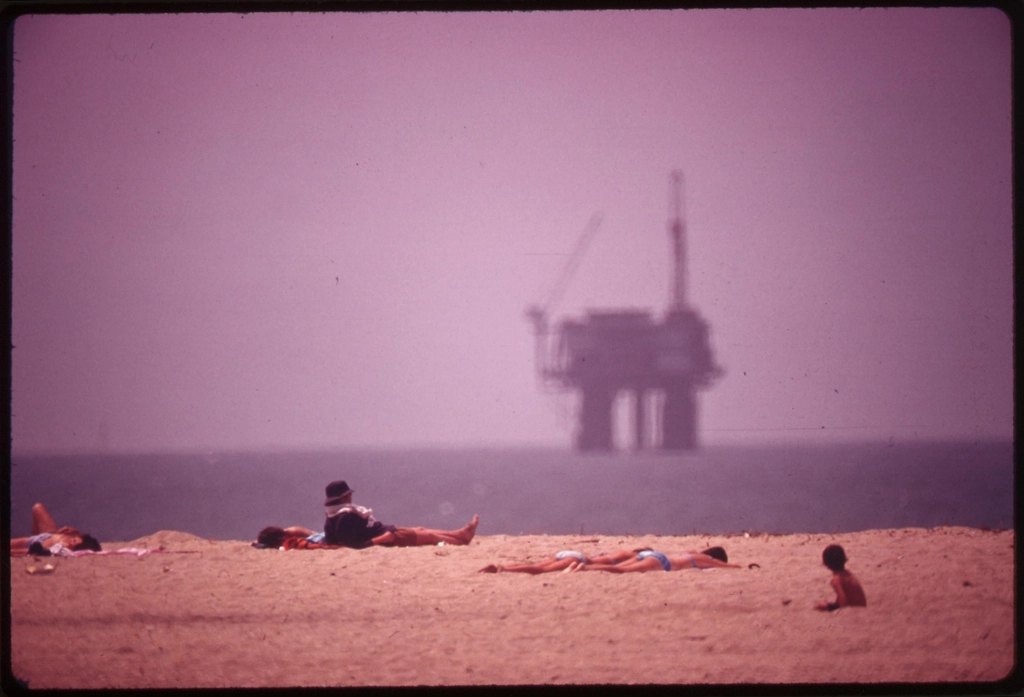
The second day was the reason most people come to Venice. Beyond the shelf edge, 30 to 80 miles from the passes in the area charted as Mississippi Canyon, the oil industry has moored a string of floating production platforms in 2,000 to 6,000 feet of water. They are enormous structures, lit like small cities at night, and each one is an artificial reef that holds bait, and therefore tuna, in the middle of an otherwise empty ocean. The nearest floaters lie about 35 miles south of the pass; the farther ones require a boat with the range and the seakeeping to spend the night 70 miles offshore.
We ran to a platform 45 miles out in a two to three foot sea, arriving mid-afternoon to find two other boats already working the up-current side. The technique is the same as at the Lump but on a bigger scale: set up 200 to 400 yards up-current from the structure so the chum drifts down past the legs, and keep the line of cut bait going without interruption. The rig crews on the platform have watched a thousand boats do this and pay no attention. The tuna, on the other hand, have learned that boats mean food.
Chunking after dark
Nothing quite prepares a first-timer for the night bite at a floater. The platform’s lights throw a pool of brightness a hundred yards across, flying fish skitter through the glow, and under it the yellowfin come up from the depths to feed. We had the first fish before the sun was fully down and did not stop until three in the morning. Chunks drifted back at 30 to 60 feet on 80 pound leaders; blackfin took most of them, yellowfin from 40 to 100 pounds took enough. The heaviest fish of the trip, a yellowfin we estimated at 120 pounds, ate at midnight and took 45 minutes on 80 pound gear before it came to the gaff.
The work is relentless. Cutting bait, feeding the slick, clearing the other lines when a fish runs, gaffing, bleeding, icing, re-rigging, and starting again, all in the noise of the platform’s generators and the smell of pogies and diesel. By two in the morning our hands were raw and nobody cared.
Lightning and the run home
The Gulf reminds you who is in charge. At half past three a line of storms that had been flickering on the western horizon for an hour moved onto the radar app, and the app said it would be over us within 40 minutes. Lightning over a steel platform in the open ocean is not something to wait out on a 36 foot boat. We cleared the lines, cut the chum, and ran east and then north at 25 knots with the flashes lighting the wave tops behind us and rain hammering the windshield for the last ten miles. We were inside Southwest Pass, in the mud, as the sky went grey.
The final count for two days was 11 yellowfin between 50 and 120 pounds, more blackfin than we counted, one wahoo and one lost mako. In most of the world that is a season. In Venice it is a decent weekend in February, and the boats that had stayed at the farther rigs through the squall came in that afternoon with more. We will be back next winter, and we will bring more pogies.