
Vertical fishing changed our offshore days more than any other technique of the past two decades. When the trolling spread has been ignored for hours, a metal jig dropped on a mark at 250 feet will often pull an amberjack, a blackfin tuna or a grouper from water that seemed empty. Go deeper, to 800 feet and beyond, and the deep-drop rig opens a fishery of tilefish, snowy grouper, queen snapper and daytime swordfish that few anglers ever touch. The two disciplines are related but demand different tackle, and getting the basics right keeps a heavy day from becoming an exhausting one.
Metal jigs and how to choose them
Vertical jigs are slim metal lures weighing 100 to 400 g in offshore use. The rule is roughly 1 g per foot of water plus an allowance for current: 150 g in 120 feet of calm water, 250 to 300 g in the same depth with a 2-knot current, 400 g at 350 feet. The jig has to reach the marks quickly and stay vertical under the boat; if the line angles away past 30 degrees, go heavier or reposition. Long, symmetrical jigs sink fast and straight, which suits current and depth; short, center-weighted jigs flutter and fall slowly, better for suspended fish or slow-pitch work. Color is secondary: silver and blue in clear water, pink and glow in deep or stained water, and a glow stripe on anything fished below 300 feet.
Line, leader and assist hooks
Jigging only works with braid, because monofilament stretches too much to transmit the lift to the jig or the bite to the angler. For offshore work, 50 to 80 lb braid is the range: 50 lb for blackfin, snapper and school amberjack, 65 to 80 lb around wrecks where big jacks, cubera and grouper will try to reach the structure. Thin 8-carrier braid cuts current better than a coarse weave. Leader is 6 to 10 feet of 60 to 100 lb fluorocarbon joined with an FG knot, which passes cleanly through the guides on a fast drop.
Assist hooks replaced trebles for good reason. An assist is a short, strong single hook on a loop of heavy cord, attached to the top ring of the jig with a split ring. On a strike it pivots freely and holds in the corner of the mouth. Sizes run from 2/0 on small jigs to 7/0 on a 400 g jig. One assist on top is standard for speed jigging; two, top and bottom, for slow pitch, where fish inhale the whole jig.
Speed jigging versus slow pitch
Speed jigging is the athletic version. The jig is dropped to the bottom, then retrieved with long, fast sweeps of the rod and a full turn of the handle on each sweep, so the lure races upward in darts. The target is a fish that chases: amberjack, tuna, wahoo, big kingfish. Rods are 5 to 6 feet and stiff, reels have a retrieve of 5:1 or higher, and ten drops in 300 feet is a serious workout.
Slow pitch works the other way. The rod is longer and softer, 6 to 6.5 feet, with a parabolic action that loads under the jig’s weight. The angler makes a short lift of a quarter to half turn and lets the rod unload, which flicks the jig up and lets it fall on its side. The fall triggers the bite, so the retrieve is a series of small pitches with pauses between. It brings in the fish that do not chase: grouper, snapper, tilefish. Drag is set light, 8 to 12 lb, because the rods are not built for pumping; the reel does that work.
Deep-drop tackle and electric reels
Past 500 feet, hand-cranking is no longer sensible; a 3 lb sinker coming up from 1,000 feet is ten minutes of steady work with no fish on. Electric reels hold 800 to 1,200 yards of 65 to 100 lb braid and retrieve at 200 to 400 feet per minute under motor, with a manual handle for fighting a fish. Rods are short and heavy, 30 to 50 lb class, with a bent butt that sits in a gunwale holder.
A typical deep-drop rig is 15 to 30 feet of 200 lb mono with three to five dropper loops carrying 8/0 to 11/0 circle hooks, a 3 to 5 lb sinker at the bottom, and a water-activated light at the top. Baits are squid, cut bonito or barracuda strips, tough enough to survive the descent. Depths for the main targets are consistent along the Gulf, the Straits and the Atlantic drop-off.
- Blueline tilefish: 250 to 450 feet over mud and rubble bottom.
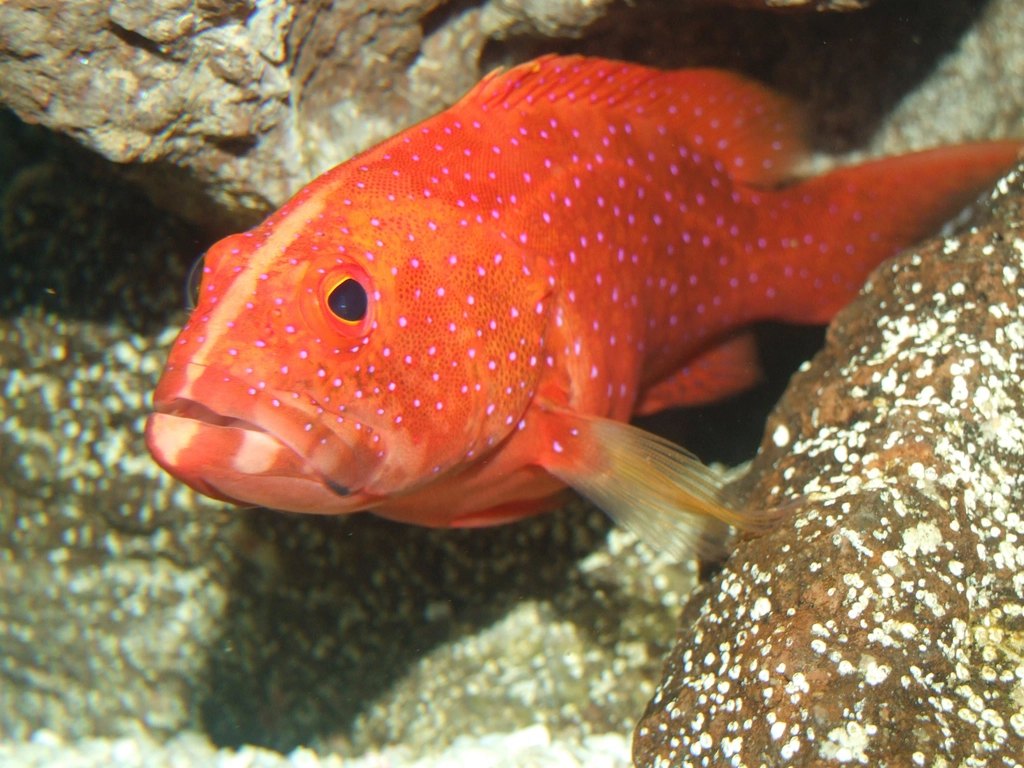
- Snowy grouper and yellowedge grouper: 500 to 900 feet on rocky ledges.
- Golden tilefish and queen snapper: 600 to 1,000 feet, mud for the tilefish, hard ledges for the queens.
- Barrelfish and wreckfish: 800 to 1,500 feet on steep structure.
The drop takes three to five minutes. Once the sinker hits, reel up two or three turns so the bottom bait hovers, and wait for the rod tip to load. Bites at 900 feet show as a change in the bend rather than a strike; let the reel take up the slack rather than swinging on the rod.
Daytime swordfishing in broad strokes
Daytime deep-dropping for swordfish is the most demanding version of the technique, but the outline fits here. Swordfish feed in daylight at 1,200 to 1,800 feet along steep drop-offs where the current pushes bait against the wall. The rig is a single bait, usually a whole squid or a strip of bonito belly, on a 300 to 400 lb mono leader with an 11/0 to 14/0 hook, a light above the bait, and 8 to 12 lb of lead on a breakaway clip so the weight drops on the strike. Main line is 80 lb braid with 100 to 200 feet of mono wind-on leader to absorb the shock. The boat power-drifts bow into the current to keep the line vertical, and the captain watches the rod tip for the tap-tap of a bill hitting the bait. The hook is set by cranking into the fish; the fight from 1,500 feet can run one to three hours.
Working the water column with the sounder
Before every drop, we check the depth, the drift direction and the marks. Fish showing 20 to 60 feet off the bottom are jig fish; fish plastered to the structure are deep-drop fish. Set up up-current so the drift carries the jig across the mark, and start the retrieve as soon as the lure reaches the depth of the marks, not just at the bottom. A jig fished through the column on every drop, with a pause at the marks and a fast lift above them, finds fish that a bottom-only presentation never touches. Deep, quiet and methodical: that is the whole game.
Read next: Fishing the Lunar Cycle: How Moon Phases Shape Offshore Bite Windows