
Yes, you can catch fish at night, and for many anglers the darkness is an advantage rather than a handicap. The reasons are mostly about behavior: fish feel safer, the water is quieter, and pressure from other boats fades. This guide explains why that happens before it explains the gear and tactics, so you can adapt the ideas to the water you actually fish.
One note on scope: the material this article draws on comes largely from lake and shoreline angling. The principles carry over to the sea, but the offshore specifics (target species, depth ranges, seasonal windows) are left out here because they are not backed by the sources behind this piece.
- Fish often feed more freely after dark, and you meet less competition on the water.
- Silhouette, sound and sparing use of light matter more than lure variety.
- Preparation and safety decide whether a night trip is enjoyable or risky.
Can you really catch fish at night?
The short answer is yes, and the longer answer explains why. Many species become more willing to feed once the light drops. Cooler temperatures and dim conditions make fish feel less exposed, so they move into shallower water that they would avoid in bright sun. Anglers who understand this can target them with more confidence.
There is a second reason that has nothing to do with the fish. Night trips are quiet. Fewer people are on the water, so the places that are crowded by day are open to you, and fish that have been pressured by daytime traffic are often more ready to eat once the boats go home.
The honest caveat is that night fishing is not automatically better. It is a different game with its own rhythm, and it rewards anglers who treat it as a separate skill rather than a daytime trip run later.
Why does fish behavior change after dark?
Understanding the change helps you decide where to cast and when to start. Three things shift at the same time.
- Feeling safe. Low light gives predators and prey a sense of cover, which pulls fish toward shallower feeding areas.
- Less pressure. Water that sees heavy traffic by day can settle once the crowds leave, and fish become more willing to feed.
- Sensing by vibration. With less to see, fish lean on the lateral line and inner ear to detect movement and sound.
That last point drives much of what follows in this article. If a fish is hunting by sensing disturbance and outline rather than detail, your presentation should be built around disturbance and outline.
The dusk window
Anglers often describe a burst of aggressive feeding just before dark, followed by a lull when the bites simply stop. One plausible reading is that fish need a short period to adjust to the loss of light, and that a heavy feed can also leave them full. Whatever the cause, the practical lesson is patience. Arriving about an hour before dark lets you watch the transition and learn when the bite switches back on for that particular spot.
Which lures and presentations work in the dark?
The guiding idea is to give the fish something it can detect without seeing detail. Two qualities matter most: silhouette and sound.
For silhouette, dark colors are the standard choice. At night the sky tends to be lighter than the water, so a dark lure stands out against it as a clear outline. Many anglers simply use black and leave the color debate behind.
For sound and vibration, choose baits that announce themselves:
- Noisy topwater plugs that push water at the surface.
- Rattling crankbaits.
- Soft plastics with paddletails and baits with sound chambers.
Scent can also help with slow-moving baits, because it gives the fish something more to detect and encourages it to hold on longer.
Size and glow
When larger predators are on the prowl they often prefer a bigger meal, so moving up in bait size is a reasonable adjustment. Glow-in-the-dark lures and lighted floats are another option, and they help you track your line as well as attract fish. Treat them as a supplement to silhouette and sound rather than a replacement.
Where should you fish at night?
Fish tend to hold in the same general places they use by day, but they often slide up shallower to feed. That means familiar structure is the right starting point, and it is worth scouting in daylight so you know what lies beneath the surface.
Features worth looking for include:
- Drop-offs and edges where shallow feeding areas meet deeper water.
- Open flats and passages in vegetation, rather than thick, snag-prone cover.
- Points and humps with a mix of bottom types.
- Lighted structures, where small fish gather and larger predators follow.
That last item is a useful principle for any water. Light draws baitfish, and baitfish draw predators. Keep in mind that the bigger fish often sit just outside the brightest part of the light, in the shadow line, so work the edge of the glow before you work the center of it.
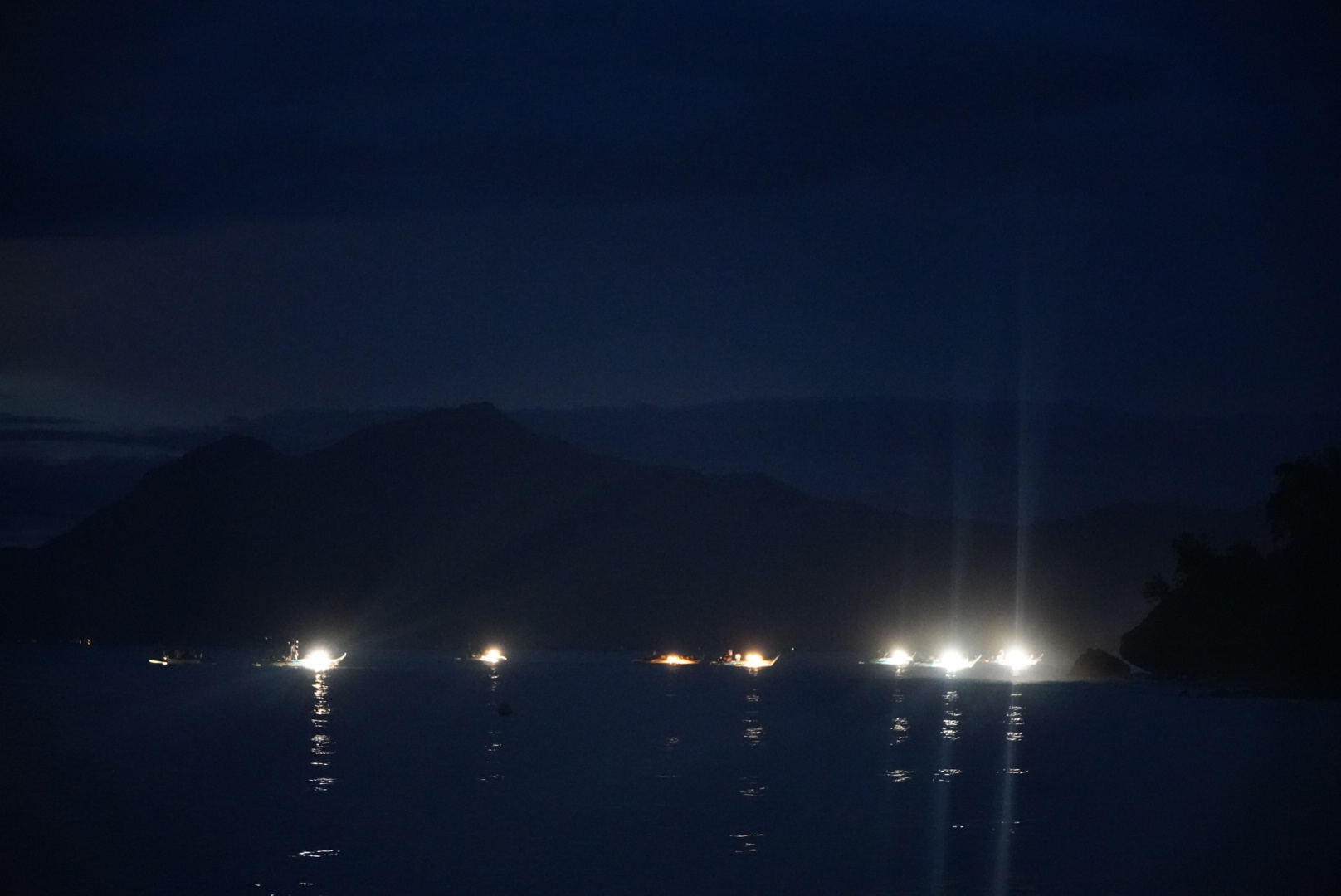
The same logic is what light-attraction setups rely on: concentrate baitfish, then fish the edge of that activity. Moonlight and calm conditions also help, since a bright moon improves your own visibility and many anglers find activity rises around the full moon.
What gear and lighting do you need?
Night fishing rewards a simple, tidy setup. Bring fewer rods than you would by day, a small number of tackle trays, and keep the deck clear so there is nothing to trip over. A sensitive rod is useful because you will rely on feel more than sight, and a smooth reel with a properly set drag matters because darkness is a poor time for gear failure.
Light, used sparingly
A hands-free headlamp is the core of your lighting. Red or green settings preserve your night vision and are less likely to spook fish than a white beam. Your eyes need time to adapt to the dark, so the less you flash bright light around, the better you will see. Keep a stronger lantern or spotlight for the moments that genuinely need it, such as tying knots or landing a fish, and avoid aiming it at the water.
Seeing your line
Some anglers use fluorescent line with a black light so the line glows and strikes become visible. Clip-on rod tip lights and reflective tape on the rod tip serve a similar purpose. A landing net and pliers should be within easy reach, and a backlit GPS or fish finder helps you hold your position and stay oriented.
Finally, expect a drop in temperature after sunset even in summer, and pack layers and insect repellent.
How do you stay safe on a night trip?
Darkness removes the margin for error, so safety is part of the method rather than an afterthought. Most of it comes down to preparation and discipline.
- Know the water. Fish places you already know, with familiar hazards and a clear route back to the ramp or harbor.
- Tell someone. Share where you are going and when you expect to return, and fish with a partner when you can.
- Run lights on. Make sure your running lights work and keep them on the whole time, then carry a search spotlight and spare flashlights.
- Wear a flotation device. Reflective panels help other boaters see you.
- Carry communication. A marine radio or a charged phone in a waterproof case, and a whistle or beacon as backup.
- Check gear in advance. A written checklist catches problems while you are still at the dock.
On a boat with a crew, agree beforehand how you will signal and who handles which job, because shouted instructions are harder to follow in the dark. Keep movement slow and deliberate, and keep walkways clear.
If conditions change, the right decision is usually to head in early. A calm night is a gift; a deteriorating one is a reason to go home.
Frequently asked questions
Do fish bite better at night than during the day?
It depends on the species and the water, but many fish feed more freely after dark because they feel safer and face less boat pressure. Night is not always better, so treat it as a different approach rather than a guaranteed upgrade.
What color lure is best for night fishing?
Dark colors, especially black, are the usual choice because they show as a clear silhouette against the lighter night sky. Add sound or vibration to the lure so fish can find it by feel as well as by sight.
Does a full moon help when fishing at night?
Many anglers see more activity around the full moon, and the extra light also makes it easier for you to see. It is a helpful factor, not a promise, so weigh it alongside conditions like wind and water clarity.
Should you use a bright light while fishing at night?
Use light sparingly. Red or green headlamps protect your night vision and are less likely to scatter fish, while a stronger lantern is best saved for tasks like tying knots or landing a fish and kept off the water.
Related reading
- Vertical Jigging and Deep-Drop Basics
- Reading Your Electronics: Sonar, Temperature and the Water Column
Photo: Batangas fishing at night, by Fiszi37, CC BY 4.0 (Wikimedia Commons)
