
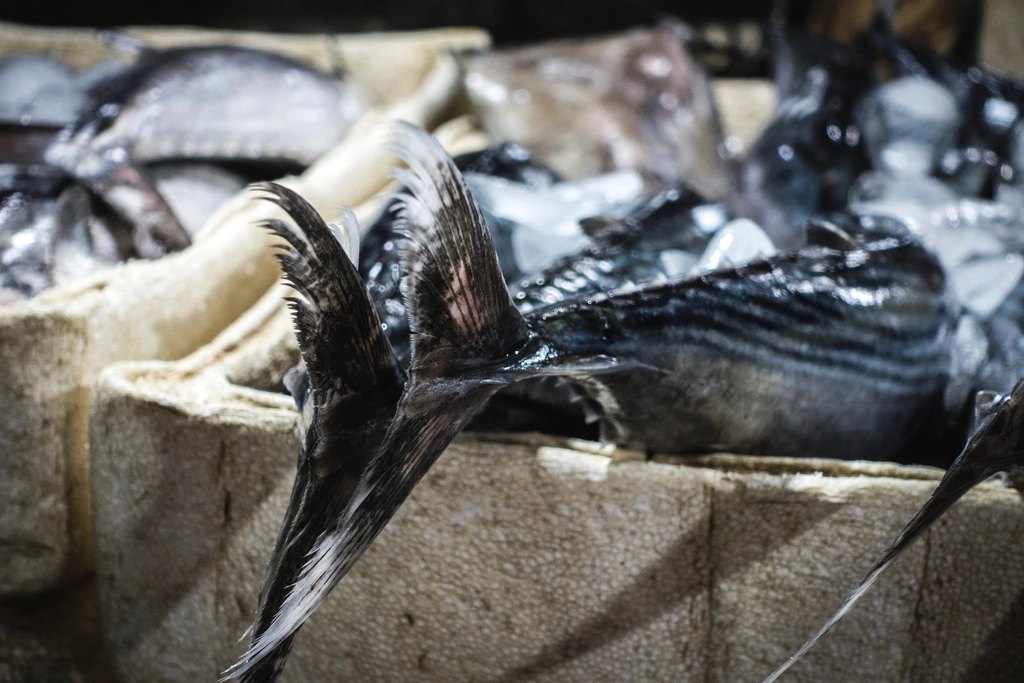
A fish photograph has two subjects, and only one of them can consent. The angler wants proof; the fish wants to breathe. Most of what separates a good trophy shot from a bad one is deciding, before the fish comes to the boat, which of those two comes first. For a fish that will be kept, the answer is simple and the photo can wait for the dock. For a fish that will be released, a sailfish, a marlin, a tarpon, most sharks, an undersized tuna, the photograph has to fit inside the few seconds the fish can spare. We have found that the pictures taken under that constraint are usually better anyway.
Keep the Fish in the Water
The starting rule for any release species is that the fish stays in the water, and the camera comes to it. Billfish should never be lifted into the cockpit for a photograph: their bodies are not built to support their own weight out of the water, the slime coat that protects them from infection comes off on the deck, and a marlin thrashing on the boat is dangerous to everyone. The right shot is the mate holding the bill or the leader alongside the boat, the fish upright in the water with its colours lit up, and the angler leaning over the gunwale behind it. Sharks are the same: in Florida state waters prohibited species such as great hammerheads must be released without being removed from the water, and the photograph is taken from the deck. A tarpon over 40 inches cannot legally be brought aboard in Florida at all. For fish that can be briefly lifted, a dolphin, a small tuna, a snapper, the fish is out of the water for no longer than the photographer can hold a breath, literally. Ten to fifteen seconds is plenty if the camera is ready; if it is not, the fish waits in the water, not in the air.
Hands, Hold and Angle
Wet your hands before touching any fish that will be released; dry skin and towels strip the slime coat. Hold the fish horizontally with one hand under the belly near the pectoral fins and the other around the tail wrist, and never hang a fish from its jaw or gill plate alone, because the weight tears the jaw and damages the gills. Fingers stay out of the gills entirely. The horizontal hold also happens to be the better picture: the full length of the fish is visible, the colours read, and the angler’s face is beside it rather than behind it. Hold the fish slightly toward the camera to show its size, but not at arm’s length; the exaggerated long-arm hold has become a joke among anglers and fools no one. Knees down, fish at chest height, angler looking at the fish or at the lens, not at the deck. For a large fish that needs two people, one supports the head and one the tail, and both are in the photograph.
Camera Settings on a Moving Boat
A boat is a bad tripod. The two settings that matter are shutter speed and focus mode. Shutter speed should be at least 1/1000 of a second to freeze a fish and a rolling deck, faster for a jumping fish; on a phone, burst mode does the same job. Set the camera to continuous autofocus and shoot in bursts of five or ten frames, then keep the best one. ISO can rise to 800 or 1600 in the flat light of a cloudy day without harm. Salt spray on the lens is the most common ruin of an offshore photograph, so a microfiber cloth lives in the same pocket as the camera. Waterproof phone cases work, but the lens cover scratches and fogs, so check it before the fish, not after. Keep the horizon level; an accidental five-degree tilt looks like a mistake.
Light, Time of Day and Background
Midday sun at sea comes straight down and puts every face under a hat brim in shadow. The fix is to turn the fish and the angler so the sun is slightly behind the photographer, or, better, to use fill flash even at noon; most cameras and phones will fire the flash on demand. Early morning and the last two hours before sunset give warm sidelight that makes the flanks of a dolphin or the bars on a wahoo glow, and that is when we plan the pictures we care about. Sunglasses come off for the portrait. Background is a choice: the horizon and open water say offshore, the cockpit says work, and a cluttered transom with coolers and buckets says nothing. Move the angler to the cleanest side of the boat. A fish photographed in the water with the hull behind it and the angler above is almost always the strongest composition available, and it is also the one the fish prefers.
Tournament Rules and Drones
Release tournaments run on photographs and video, and the rules are specific. Most billfish tournaments now require a video of each release that shows the fish, the angler, the mate on the leader and a dated tournament placard or a time stamp, with the mate touching the leader or the swivel reaching the rod tip as the moment of release. Some allow still photographs with a placard for sailfish; many require continuous video. Fish that are lifted from the water, or held for longer than the rules allow, can be disqualified. Read the rulebook, assign one person to the camera, and practise the sequence on the first fish of the day. Drones are common on sportfishing boats now, and legal for photography in most places, with limits. In the United States a recreational drone over 250 grams must be registered, cannot be flown above 400 feet, and must stay within the operator’s sight; commercial use needs a Part 107 certificate. Drones cannot be used to spot or drive fish in most tournaments, and some events ban them altogether.
The Ethics of the Picture
The photograph outlives the fish, and it teaches. A picture of a sailfish laid on a deck, or a shark hung by its tail, tells every viewer that this is how it is done, and the next angler copies it. A picture of the same fish in the water beside a boat teaches the opposite. That is why we hold ourselves to a simple test: if the fish would not survive the way it was photographed, we do not want the photograph. The best trophy shots we have seen are not of the largest fish. They are the moments when the light was right, the fish was upright and bright, the angler’s hands were where they belonged, and everyone in the frame, including the fish, was about to go back to work. We keep those pictures; the others we delete.