
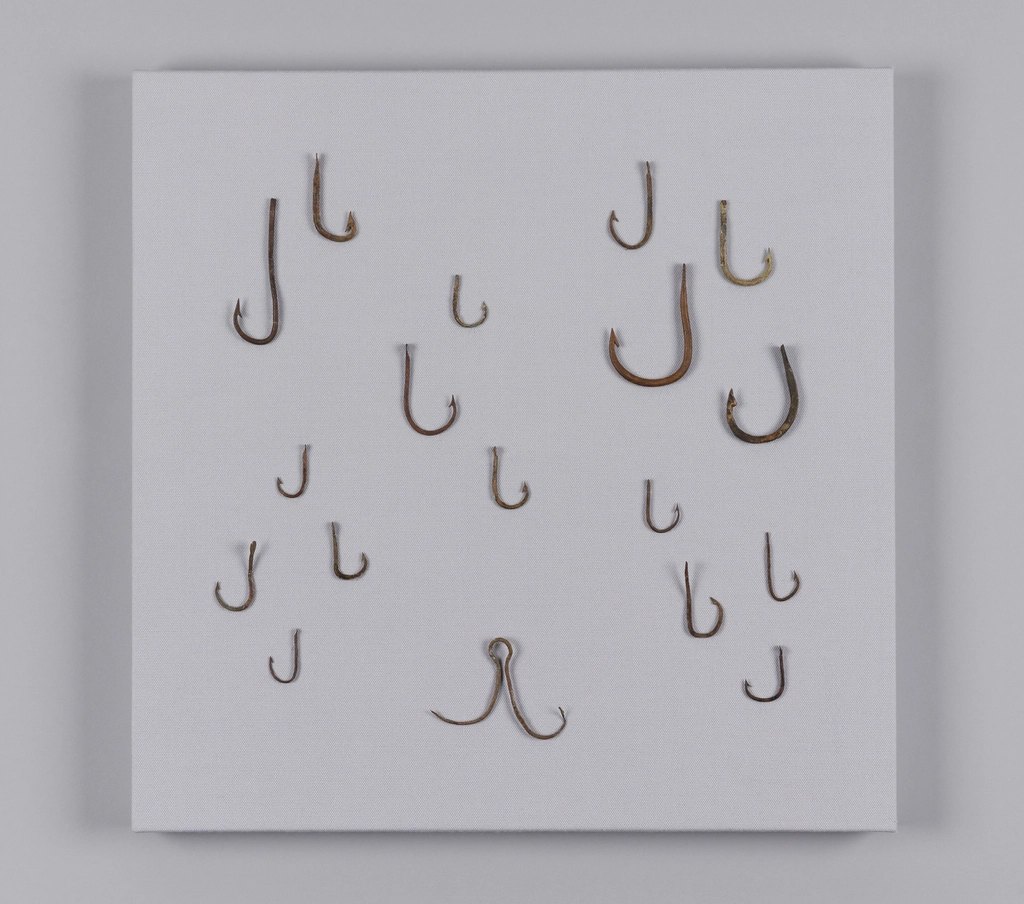
Every fish we have lost to a failed connection was lost to one of a handful of knots or crimps, and every failure was avoidable. Offshore tackle is a chain of links: braid to leader, leader to hook, mono to swivel, wire to lure. The strongest line in the world does nothing if the knot holds 60 percent of its rating. After seasons of pulling knots to failure at the dock, we have settled on six connections that cover almost every saltwater situation. Learn them until the hands do them without thinking.
Fluorocarbon, monofilament and leader length
Before the knots, the material. Monofilament stretches 15 to 25 percent before breaking, and that stretch is a virtue when trolling at 8 knots or when a fish surges at the boat. Fluorocarbon stretches less, sinks, resists abrasion better and is harder for fish to see in clear water. It is also stiffer, so a badly seated knot in fluorocarbon fails badly. For live-bait and light-tackle work in the clear water of the Keys or the Bahamas, 30 to 60 lb fluorocarbon makes a measurable difference on sailfish, mahi and tuna. For trolling lures on 200 to 400 lb leader, mono is cheaper and easier to crimp.
Leader length follows the method. Casting to mahi or slow-trolling live bait: 4 to 8 feet. Kite fishing: 15 feet. Trolling lures for marlin: 15 to 25 feet of heavy mono, which gives the mate something to hold. For kingfish and wahoo, 6 to 12 inches of single-strand wire in front of the hook, tied to a longer mono or fluorocarbon section. Line-class tournament rules limit leader to 15 feet on classes up to 20 lb and 30 feet above that.
The FG knot: braid to leader
The FG is a friction knot. The leader is laid along the braid and the braid is wrapped around it in alternating half-hitches, 15 to 20 wraps under tension, so the braid bites into the leader and grips it like a finger trap. It is locked with a series of half-hitches around both lines, and the leader tag is trimmed flush. Done properly it is the slimmest strong connection available, passing through the guides without a bump, and it tests close to 100 percent of the leader on fluorocarbon up to 80 lb. It is the knot for jigging, popping and any spinning-rod work. The failure mode is a knot tied without tension, which slips; keep the braid tight and test with a hard pull before fishing.
The Bimini twist: the double line
The Bimini creates a long loop of doubled line, tied with 20 to 30 twists rolled down under tension and locked with half-hitches. It holds 100 percent of line strength, so whatever comes next is tied to doubled line and is twice as strong as the main line. Every trolling outfit we run has a Bimini in the main line, mono or braid, with a loop of 3 to 5 feet that connects to a wind-on leader with a loop-to-loop. On braid use 30 twists and pull the wraps down slowly so they lie flat; on mono 20 twists is enough.
The uni-to-uni: the quick join
When two lines of similar diameter need joining fast, such as adding a mono top shot to braid, the uni-to-uni does it in under a minute. Each line is tied in a uni knot around the other, five to six turns for mono, eight to ten for braid, and the two knots are drawn together. Strength is 80 to 90 percent, fine for a top shot, and it is far easier to tie in a moving boat than an FG. For lines of very different diameters, double the thinner line first.
The improved clinch and the non-slip loop knot
These are the two terminal knots for mono and fluorocarbon. The improved clinch is the standard hook and swivel knot for leaders up to about 50 lb: through the eye, five turns around the standing line, through the first loop, then back through the big loop, moisten and draw slowly. It tests 85 to 95 percent in lighter line. Above 50 lb the turns do not seat well, and above 80 lb it is time to crimp. The clinch cinches tight to the eye, right for a bait that should not swing.
The non-slip loop knot leaves an open loop through the eye so a jig, plug or fly can swing freely. Tie an overhand knot in the leader, pass the tag through the eye and back through the overhand, make three to five wraps around the standing line, then back through the overhand again and draw down. Fewer wraps on heavier line, more on light line. The free loop is what makes a jig flutter and a live bait swim naturally on a 40 to 60 lb leader.
Crimps for heavy mono and the haywire twist for wire
Above 80 lb, mono is too stiff to knot reliably and crimping takes over. The leader passes through the sleeve, around the hook eye or swivel, and back through, then is squeezed with a proper crimping tool. The sleeve is matched to the leader diameter from the maker’s chart, for example a 1.9 mm aluminum sleeve for 200 lb mono and 2.2 mm for 300 lb; aluminum for mono, copper for cable. The rules that prevent failures are simple.
- Never crimp at the very end of the sleeve; leave a millimeter of tag showing and crimp the middle two-thirds so the mono is not cut.
- Flare the tag end gently with a lighter so it cannot slip back through.
- Use a chafe guard inside the loop on hooks and swivels for marlin and big tuna.
- Test each crimp by pulling hard on the leader with gloves; a good crimp does not move.
Single-strand wire, 40 to 90 lb, is tied with the haywire twist, and it is the one connection that cannot be substituted. Pass the wire through the hook eye, then twist the tag and the standing wire around each other in three and a half to four full turns, keeping both strands crossing at about 45 degrees so they twist equally. Follow with five or six tight barrel wraps of the tag around the standing wire. To finish, bend the tag into a small handle at 90 degrees and rock it back and forth until it snaps off clean; never cut it with pliers, which leaves a sharp burr that opens hands. A correct haywire holds the full strength of the wire.
Six connections, one for each place a line meets something else. Practice them on the dock with old line, pull each to failure to see how it lets go, and re-tie anything that has taken a fish. A knot that has been through a fight has already been tested once; it does not owe you a second time.