
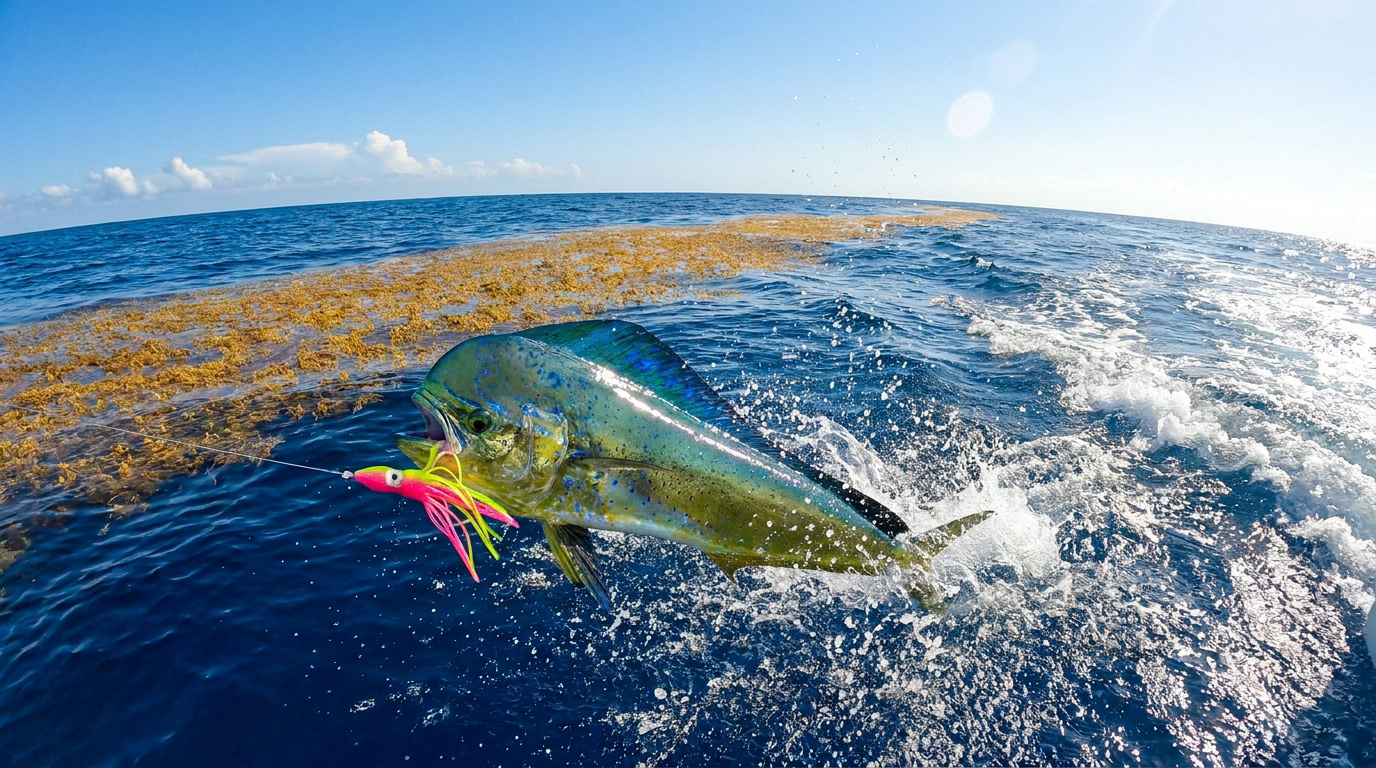
Key takeaway: Effective Mahi-Mahi trolling requires a speed of 6 to 8 knots and bright, high-visibility lures like chartreuse or pink. Target the edges of sargassum weed lines to locate schools. To maximize your catch, keep the first hooked fish in the water as a natural decoy to hold the entire school near the boat for multiple hookups.
Mahi-mahi are renowned for their exceptionally rapid growth rate, and they are capable of remarkable bursts of speed during a chase. But to trigger their aggressive predatory strike while trolling, most anglers find the sweet spot between 6 and 8 knots.
Maintaining this precise momentum is often the difference between a productive day and an empty cooler. This guide breaks down how to master your trolling speed, select high-visibility colors, and exploit sargassum weed lines to keep the school behind your boat.
- Trolling Mahi Mahi Tips for Speed and Lure Depth
- 3 Factors for Selecting Lure Colors and Profiles
- How to Fish Weed Lines and Floating Debris?
- Handling Hookups and Keeping the School Near the Boat
Trolling Mahi Mahi Tips for Speed and Lure Depth
Target Mahi-Mahi using a trolling speed of 6 to 8 knots. Deploy a staggered spread with lures at 20 to 100 feet. Use chartreuse colors and maintain forward boat momentum during hookups to keep schools active.
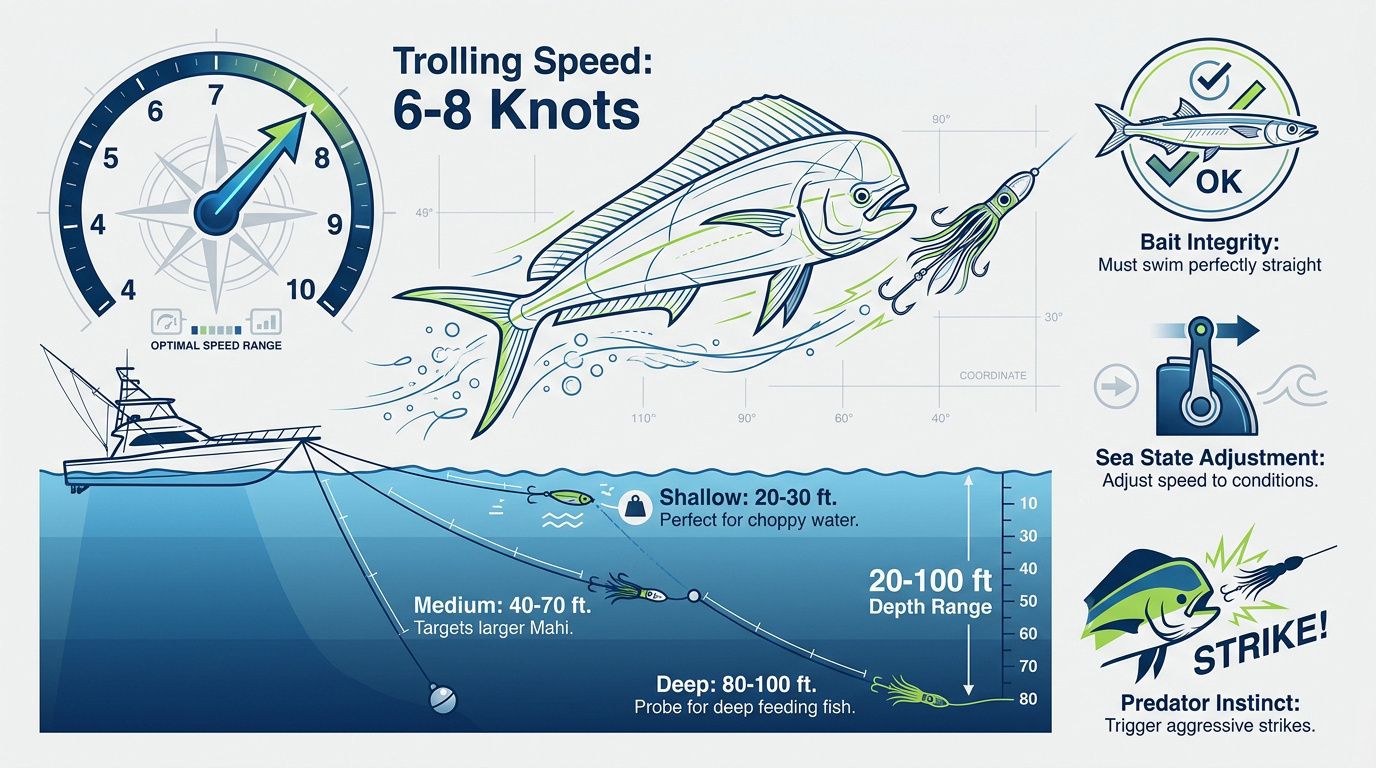
Getting the pace right is the thin line between a full cooler and a quiet day. While Wahoo hunters push 12-14 knots, Mahi demand a sweet spot of 6-8 knots to trigger their predatory strike. This specific range creates the ideal surface commotion. It mimics panicked prey without outrunning the school.
At 7 knots, keep a sharp eye on your ballyhoo integrity. The bait must swim straight and true, never spinning or washing out. A spinning bait is a ghost to a Mahi. If it starts to helicopter, you are simply wasting fuel and time.
Watch your current direction and adjust the throttle accordingly. The goal is to keep that lure looking alive and pulsing. Constant observation of the lure action ensures you stay in the strike zone.
Adjusting Lure Depth for Sea States
When the sea gets choppy, lures tend to skip or tumble excessively. You lose contact with the water column, and the presentation fails. Adding small chin weights helps stabilize the bait against the surface turbulence.
In heavy swells, cigar sinkers are your best friends. They keep lures submerged where deeper lures often find the big “bull” Mahi. These larger specimens usually lurk beneath the smaller “chickens” feeding at the surface.
Monitor your rod tips for that consistent, rhythmic vibration. If a lure skips out of a wave, ease off the throttle slightly. Maintaining constant water contact ensures your spread remains visible to hungry predators below.
3 Factors for Selecting Lure Colors and Profiles
While speed and depth get the fish to look, the actual profile and color of the lure are what force the final strike.
Matching Profile and Color to Local Forage
Identify local prey like flying fish or squid. Choose lure sizes that mimic these specific baitfish. Matching the hatch is a fundamental rule for consistent Mahi success.
I recommend high-visibility colors like chartreuse, pink, and blue/white. Bright sunlight requires more reflective surfaces. Use darker silhouettes in low-light conditions or overcast skies for contrast.
Clear water demands natural tones. Murky water requires saturated, bold colors.
Power of Simple Feathers and Cedar Plugs
Detail the effectiveness of 4-6 inch skirted feathers. These simple lures create a great bubble trail. They are easy to troll and very durable. Cedar plugs are also legendary for their erratic, darting action.
Plastics offer better texture. Hard lures provide more vibration and noise. Both have their place in your spread.
Keep a variety ready. Swap lures if the fish show interest but don’t bite.
Maintaining Natural Bait Swimming Action
Rigging ballyhoo requires precision. Break the beak and tuck the hook properly. A natural swimming motion is superior to any artificial lure when fishing is slow.
Prevent bait spinning to avoid line twist. Use high-quality swivels and check baits regularly throughout the day. A spinning bait will scare off wary Mahi and ruin your fishing line.
Ensure the hook exit point is centered. This keeps the bait tracking straight. Test the bait next to the boat.
How to Fish Weed Lines and Floating Debris?
Even the best lures won’t work if you aren’t fishing where the Mahi live, specifically around floating structure.
Positioning the Boat Along Sargassum Edges
Keep a steady distance of 50 to 100 feet from the edge. Trolling too close inevitably leads to fouled hooks. Sargassum mats serve as the primary shade and buffet for the entire chain.
Steer carefully to keep your lures in the “clean” water. Never cross over thick clumps of floating debris. A spotter on the bridge helps call out these hazards early to avoid messes.
Scan for “blue holes” within the weeds. These gaps are prime strike zones for big fish.
Staggering the Spread for Maximum Coverage
Without outriggers, use the corners for wide flat lines. Send a “shotgun” lure 100 to 125 feet back. Position it right in the center of the wake for maximum visibility.
Stagger your distances to stop tangles during sharp turns. Short lines belong in the prop wash. Long lines target the warier fish that follow the boat from a safe distance.
Keep the spread simple. Four rods often prove more effective than six when things get hectic.
Using Electronics to Locate Deeper Fish
Identify current edges and temperature breaks on your sonar. These invisible barriers hold plenty of bait. Look for bait balls sitting 30 to 50 feet under the floating mats.
Seasonal migration changes everything. Fish often hold deeper during winter months. Adjust your trolling weights to reach these schools when the surface temperature drops or pressure rises.
Trust your fish finder. If you see marks, circle back immediately.
Finding the fish is half the battle, but keeping them behind the boat is where the real numbers are made.
Handling Hookups and Keeping the School Near the Boat
Finding the fish is half the battle, but keeping them behind the boat is where the real numbers are made.
Keeping the Boat Moving to Trigger Strikes
Do not stop the boat immediately when a rod goes off. Maintaining forward momentum prevents line tangles. Multiple hookups often occur when the boat keeps moving after the first strike.
Clear non-active lines quickly. This creates space to fight the fish. Boat motion keeps the rest of the school interested.
Keep the hooked fish in the water. This acts as a natural decoy. The school will follow their struggling companion.
Sink and Swim Technique for School Retention
Explain the “bread crumb” method using small chunks of bait. Toss these bits slowly to hold the school near the transom. Transition from trolling to pitch baits on light spinning tackle. This allows you to target specific fish in the school.
Never take the last hooked fish out of the water until another is hooked. This is the “sink and swim” secret. It prevents the school from sounding.
Use live bait if possible. A live pilchard is irresistible to a schooled Mahi.
Safe Boat Handling and Clearing Lines
Address boat control during chaotic multiple hookups. The captain must maintain a clear path. Safety protocols are vital when gaffing green fish near the hull to avoid injury.
Mention local bag limits and size regulations. Only keep what you can eat. Mahi grow fast, but responsible harvesting ensures future populations remain healthy for everyone to enjoy.
Watch for flying hooks. Use pliers for all hook removals.
Mastering mahi-mahi on the troll requires maintaining 6 to 8 knots, deploying high-visibility chartreuse lures, and targeting sargassum edges. Adjust depth for sea states and keep the boat moving during hookups to hold the school. Apply these tactics now to turn every weed line encounter into a multi-fish feeding frenzy.
FAQ
What is the ideal trolling speed for targeting Mahi-Mahi?
The magic range for Mahi-Mahi is generally between 6 and 8 knots. This speed is fast enough to create the surface commotion that triggers their predatory instincts, yet slow enough to ensure that natural baits like ballyhoo swim straight without spinning or washing out.
While you might push up to 9 knots with specific skirted lures to cover more ground, staying in the 7-knot sweet spot ensures your spread looks alive and appetizing. This is significantly slower than the high-speed tactics used for Wahoo, focusing instead on a consistent, enticing presentation.
Which lure colors are most effective for catching Mahi?
Mahi-Mahi have excellent vision and respond aggressively to bright, high-visibility colors. Chartreuse, pink, blue/white, and the classic “dolphin” green/yellow combinations are legendary producers, especially under bright sunlight and in clear blue water.
In overcast conditions or murky water, you should opt for saturated, bold tones or darker silhouettes to provide better contrast. While complex patterns exist, simple 4-6 inch feathers and cedar plugs are often all you need to trigger a strike when the fish are active.
How should I fish around sargassum weed lines?
The golden rule is to troll along the “clean” side of the edge, maintaining a distance of 50 to 100 feet from the actual weed mat. This prevents your hooks from constantly fouling while keeping your lures in the prime strike zone where Mahi hunt for baitfish hiding under the grass.
If you spot a productive line, it is wise to tighten your spread. Bring your “shotgun” line in to about 100-125 feet and consider adding a weighted flat line 30-40 feet back to target the larger “bull” Mahi that often lurk 5 to 10 feet beneath the floating debris.
What is the best way to keep a school of Mahi near the boat?
The most effective secret is the “sink and swim” technique: never take the last hooked fish out of the water until another one is hooked. Keeping a struggling fish in the water acts as a natural decoy that prevents the rest of the school from sounding and moving away.
You can also use the “bread crumb” method by tossing small chunks of bait (chunking) to keep the school interested near the transom. Transitioning from trolling to pitch baits with light spinning tackle during this time allows you to maximize your catch once the school is localized.
Why is lure action more important than complex designs?
Mahi-Mahi are opportunistic feeders attracted to movement and vibration. Lures like chuggers create a distinct bubble trail and surface splash, while cedar plugs offer an erratic darting action that mimics a panicked baitfish. These simple movements are far more critical than realistic paint jobs.
Whether you are using soft plastics for texture or hard-bodied lures for noise, the goal is to maintain a natural swimming motion. Always check your gear to ensure lures aren’t tumbling or skipping excessively, especially in choppy seas, as a lure that stays in contact with the water is much more likely to be seen.