
A tide table is a schedule of water movement, and fish live by that schedule long before anglers consult it.
- A tide table gives you the timing of highs and lows, but the current is what moves bait and predators.
- Spring and neap tides change how strong that current runs and how long slack water lasts.
- Local predictions, a moon calendar and your own logbook work best when used together.
What does a tide table actually tell you?
At its simplest, a tide table lists the predicted times of high and low water for a station, along with the height at each point. Those heights are measured against a reference level called a datum. Reading the datum line on your table matters, because a low tide of a given height means something different depending on the baseline the numbers are drawn from.
Most ocean shorelines follow a rhythm of roughly two rises and two falls each day. Some places have only one high and one low in a day, and others have a mixed pattern in which the two tides of a day are uneven in size. When you open a table for a port you do not know, check which pattern it follows before you build a plan around it. The first high of the day may be noticeably bigger than the second, and that difference is worth noting.
Remember also that a table is a prediction. It is built from astronomical forces and the shape of the local coastline, and it does not account for what the weather does on the day. Wind and barometric pressure can push water levels away from the printed numbers, so treat the table as a baseline and compare it with the current forecast.
Why does moving water change the way fish feed?
The why comes before the how. Rising and falling water is not just a change in depth. It sets up oscillating currents, usually called tidal streams, and these push plankton, small baitfish and crustaceans along with them. Predators learn where that flow gets concentrated and wait there.
Think of current as a conveyor belt. When it runs, bait is carried past points, edges and underwater structure, and fish hold in the slower water behind those features to ambush what drifts by. When the belt stops, the delivery stops with it, and the feeding pattern often shifts or fades.
This is why the hours around the changing of the tide are so often discussed by anglers. The water is moving with purpose, bait is exposed or funneled, and predators are positioned to take advantage. The exact window varies by location and species, so use any rule of thumb as a starting point and refine it with your own notes.
How do spring and neap tides differ for an angler?
The tide’s range follows a cycle that repeats about every two weeks. Twice a month, around the new moon and the full moon, the pull of the Sun reinforces the pull of the Moon. The result is the spring tide, which has nothing to do with the season and instead comes from the sense of water jumping or rising up.
At the quarter phases, the Sun and Moon pull at right angles to each other, and their effects partly cancel. That produces the neap tide, with the smallest range of the cycle. The gap between a spring and the following neap is about a week.
What spring tides mean on the water
- Higher highs and lower lows than average.
- Stronger tidal currents than average.
- Shorter periods of slack water.
Strong flow can concentrate bait aggressively, but it also demands heavier weights and more careful boat positioning to keep a presentation in the strike zone.
What neap tides mean on the water
Neaps bring milder conditions overall. Gentler current makes it easier to hold a bait on the bottom or drift at a controlled pace, though the bite may feel less concentrated into short windows. Neither phase is automatically better. Each one rewards a different approach.
What is slack water and why does it matter?
The moment the tidal current stops is called slack water. The current then reverses direction, a stage often described as the tide turning. Slack water usually falls near high water and low water, but this is not universal. In some places the slack comes at a noticeably different time than the peak or trough of the water level.
That detail has a practical consequence. A table of heights tells you when the water is highest or lowest, not necessarily when the current stops. If you plan a drift or an anchor set around the turn, look for a dedicated current prediction for your area rather than assuming slack coincides with the printed high or low.
For the angler, slack water is a transition. Fishing that depended on flow can slow down, while fishing on structure with a controlled presentation can become easier to manage. As the current builds again in the opposite direction, many anglers watch for the bite to pick back up. Keep notes on how your target species responds, because the pattern is local and it rewards observation.
How do you combine tide data with other tools?
No single chart gives you the full picture. Build a simple routine that layers several sources, each answering a different question.
- Start with the tide table. Note the times and heights of the highs and lows for your port, and confirm which datum the heights use.
- Identify the tide phase. Check whether you are heading toward a spring or a neap, since that sets the strength of the current you can expect.
- Check a moon calendar. Lunar phase lines up with the spring and neap cycle, which gives you a second confirmation of what the water will do. For a deeper look at that side of the planning, see the earlier articles on lunar cycles and offshore bite windows.
- Add the marine forecast. Wind and pressure can alter water levels and sea state beyond what the table predicts.
- Confirm on the water. Use your electronics to watch temperature breaks, bait and structure, and compare what you see with what the table promised.
The goal is not to find a perfect hour. It is to stack small advantages so that you arrive on a productive spot with moving water, active bait and workable conditions.
How do you use current to position over structure?
Once you know the stage of the tide, the next question is where to put the boat. Structure such as ledges, wrecks, reefs and humps interrupts flow. Water piles up on the upcurrent face and drops away behind the feature, creating a seam where bait is pushed and predators wait.
Position so that your bait or lure drifts naturally through that seam. In a strong current you may need to set up well upcurrent and let the flow carry the presentation down to the fish. In a weak current you can hold closer and make smaller adjustments. Adjust weight to match the flow rather than using the same rig all day.
Change your approach as the tide changes. A spot that fishes well on the building current may need a different angle when the flow reverses, because the seam and the slack pocket move to the other side of the structure. Marking those shifts on your chart over several trips will teach you more than any rule of thumb.
How do you keep a tide log that improves your results?
A table is general, and your fishing is specific. The most useful habit is to record each trip with a few plain details: the date, the tide phase, the times of high and low, the direction of the current, the spot, the depth and what bit.
After a handful of outings, patterns appear. You may notice that one species responds to the first hour of the building current while another prefers the end of the falling water. Those observations belong to your own waters and your own methods, which makes them more reliable than any general guideline.
Keep the log honest, including the days when nothing worked. A blank day teaches you which combinations to avoid, and over a season that record becomes the most dependable tide table you own.
Frequently asked questions
What is the difference between a spring tide and a neap tide?
A spring tide occurs around the new and full moon, when the Sun and Moon reinforce each other and the tidal range is largest. A neap tide occurs at the quarter phases, when their pulls partly cancel and the range is smallest.
Is slack water always at high or low tide?
Usually it falls near high and low water, but not always. In some locations the moment the current stops differs significantly from the peak or trough of the water level, so check a current prediction if timing matters.
Can I rely on a tide table alone to plan a fishing trip?
No. A table is a prediction based on astronomical forces and local geography, and weather can shift real water levels. Pair it with a marine forecast, a moon calendar and your own logbook.
Related reading
- Photographing Your Catch: Trophy Shots That Respect the Fish
- Trolling mahi mahi tips for speed, color and weed lines
Sources
- Tide — Wikipédia (en.wikipedia.org, accessed 2026-11-24)
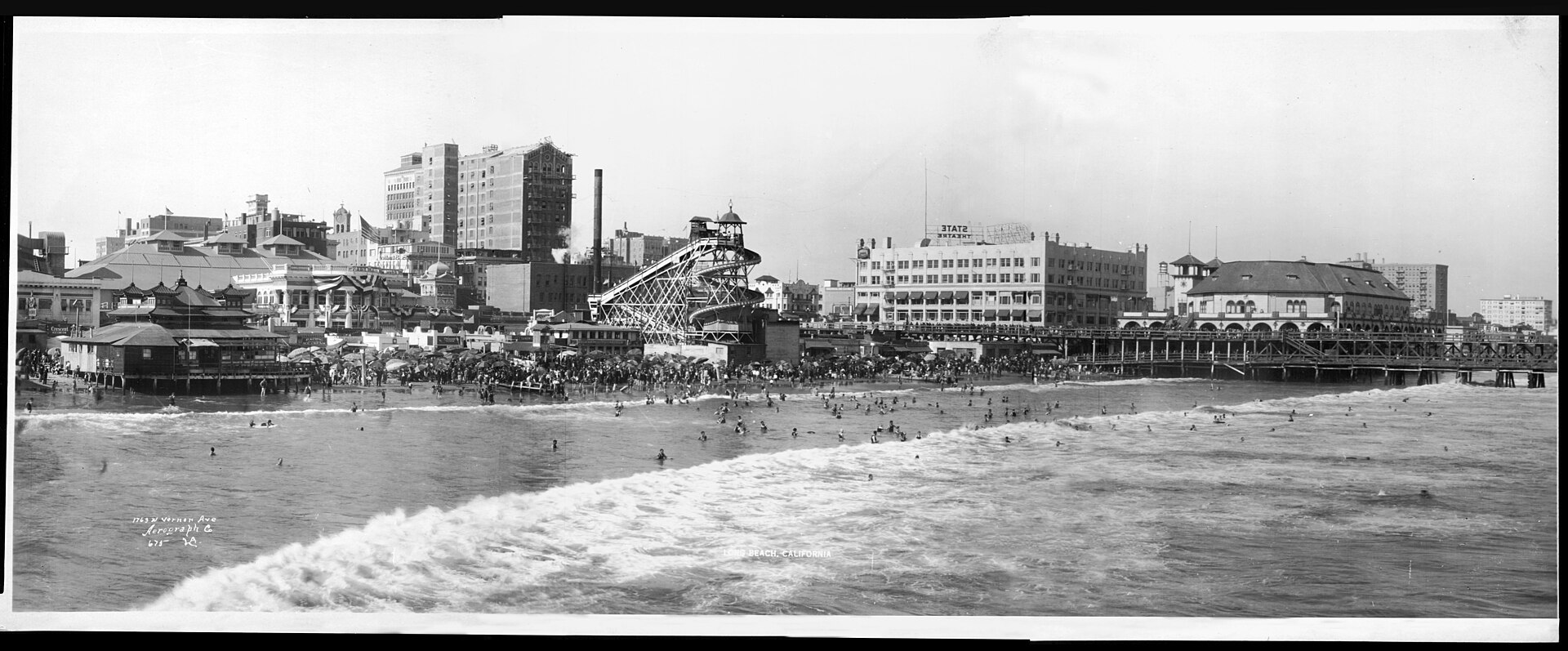
Photo: Panoramic view of the Long Beach pier, Los Angeles, 1925, by Creator:Charles C. Pierce, Public domain (Wikimedia Commons)
